
Search St. Joseph County Deed Records
St. Joseph County deed records are filed with the Register of Deeds at 125 W. Main St. in Centreville, where the office maintains the public record of all property transfers, mortgages, easements, liens, and other land documents for the county. The office participates in the PropertyFraudAlert.com program to help homeowners monitor their titles and accepts e-recording for faster document submission.
St. Joseph County Deed Records
St. Joseph County Register of Deeds Office
The St. Joseph County Register of Deeds is at 125 W. Main St., Centreville, MI 49032. Call 269-467-5603 with questions about recording, document searches, or copy requests. More information is available at the county website, stjosephcountymi.gov.
This office handles all property records for St. Joseph County. Documents recorded here include warranty deeds, quitclaim deeds, mortgages, land contracts, easements, discharges of mortgage, and judgment liens. Each document is indexed and kept as part of the permanent public record once it is accepted and stamped.
St. Joseph County borders Indiana to the south. That proximity means some landowners near the state line may have questions about how Michigan deed law applies to their property. The Register of Deeds office handles Michigan-side documents only. Indiana properties are recorded in the relevant Indiana county.
Recording Fees and Copies
The recording fee in St. Joseph County is $30 per document. It does not change based on page count. This flat fee is set by state law under MCL 600.2657 and applies to deeds, mortgages, releases, and most other recorded instruments.
Copies cost $1.00 per page. If you need a certified copy, there is an additional $5.00 certification fee. Certified copies are often required for court filings, lender transactions, or estate administration. You can request copies in person or by mail. Mail requests must include the document details, a return mailing address, and the correct payment.
Call ahead to confirm payment methods before mailing. Policies can vary, and getting the payment wrong can delay your request. The office can tell you exactly what to include.
Real Estate Transfer Tax
Michigan imposes a transfer tax on most real property sales. The state collects $3.75 per $500 of sale price. St. Joseph County adds $0.55 per $500. The combined total is $8.60 per $1,000 of the purchase price. The seller pays this in most standard transactions.
A valuation affidavit must be filed with any deed that conveys property for value. This form discloses the actual sale price so the tax can be properly calculated. Without it, the Register of Deeds may not record the deed. Most title companies and real estate attorneys prepare this form as a routine part of closing.
Certain transfers qualify for a transfer tax exemption. Examples include transfers between spouses, certain charitable transfers, and transfers to or from government agencies. Some foreclosure-related deeds also qualify. If an exemption applies to your transfer, state it clearly on the deed and attach the appropriate affidavit. An attorney or title company can help you confirm whether an exemption fits your situation.
Document Formatting Requirements
Michigan law at MCL 565.201 sets formatting requirements for documents recorded in any Michigan county. St. Joseph County follows these rules, and the Register of Deeds office can reject documents that do not comply.
The first page must have a top margin of at least 2.5 inches. All other margins must be at least 0.5 inches. Font must be 10-point or larger. The first page must clearly state the document type, the names of all parties, the legal description of the property, and the name and address for future tax statements. The name of the person who prepared the document must also be included.
Do not submit a deed with blank spaces that were meant to be filled in later. The document must be complete before it is presented for recording. Incomplete or improperly formatted documents cause delays and may result in additional trips to the office.
You can submit documents in person at the Centreville office, by mail, or electronically through an approved e-recording vendor. In-person submissions are typically processed the same day.
E-Recording and Property Fraud Alert
St. Joseph County accepts electronic recording through approved vendors. This allows title companies, lenders, and law firms to submit documents digitally without visiting the office. The document is reviewed, recorded, and returned electronically.
Approved e-recording vendors include Simplifile (1-800-460-5657), ePN, CSC, and Indecomm. Each has its own enrollment process. The authority for e-recording in Michigan comes from MCL 565.841, the Michigan Uniform Real Property Electronic Recording Act.
St. Joseph County also participates in the PropertyFraudAlert.com program. Property owners can sign up to receive notifications when a document is recorded against their property. This is a free service and can be a useful early warning system for detecting fraudulent transfers. The program does not stop a fraudulent filing from occurring, but it gives you notice quickly so you can respond.
The Michigan Treasury's change of ownership guidelines apply to all St. Joseph County deed transfers. The image below shows part of those reporting requirements.
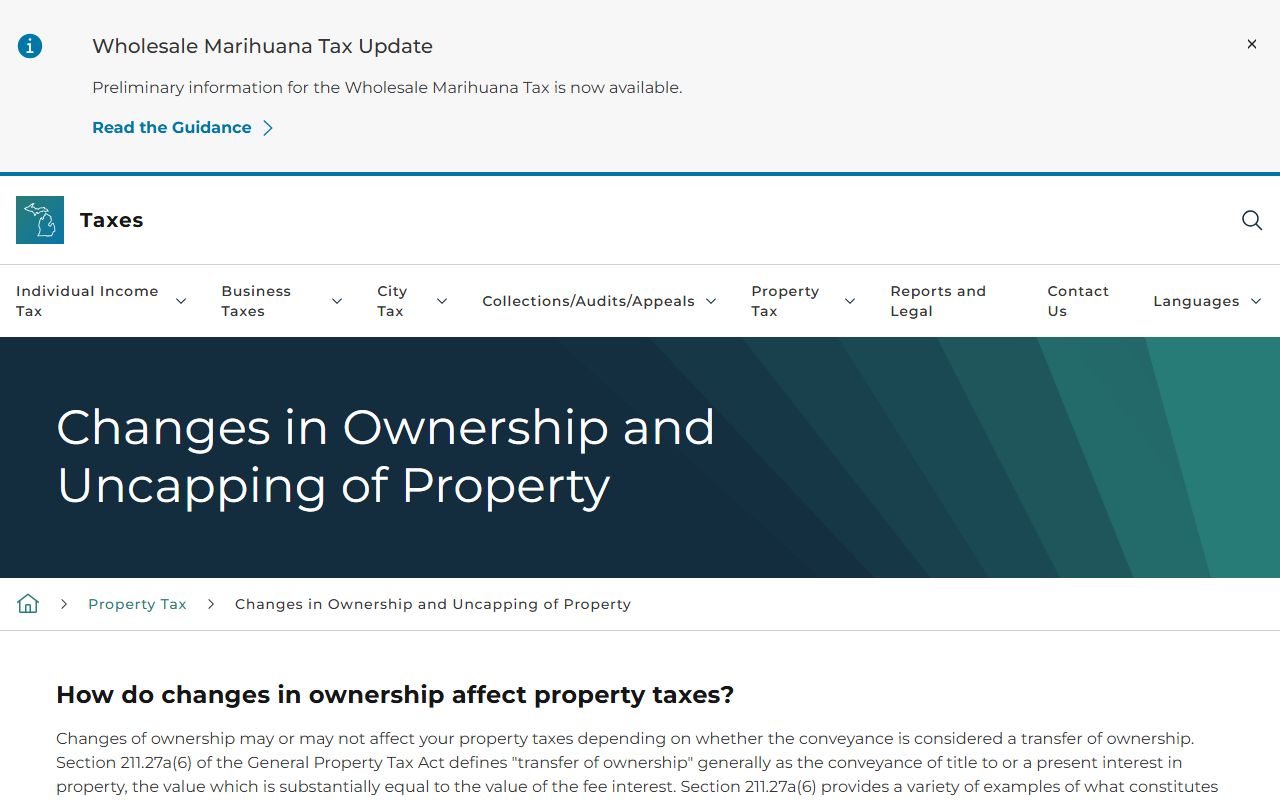
After a deed is recorded, the buyer must file a Property Transfer Affidavit with the local assessor within 45 days. Failing to do this on time can result in a penalty from the assessor's office.
Searching St. Joseph County Deed Records
You can search deed records in person at the Register of Deeds office in Centreville. Staff can assist with searches by grantor or grantee name, date range, or liber and page number. Bring as much detail about the property or parties as you can to speed up the search.
Check the county website at stjosephcountymi.gov for any current online search options. Some Michigan counties provide online access to their deed index, though availability varies. If no online portal is listed, an in-person or mail search may be your best option.
Michigan is a race-notice state. That means the first party to record a deed and who had no prior notice of another claim wins in a title dispute. Recording as soon as possible after closing is the best way to protect your ownership interest in St. Joseph County property.
The Michigan Treasury also offers resources on easement conveyances and when transfer tax applies. This is relevant for many rural St. Joseph County properties where easements are common.
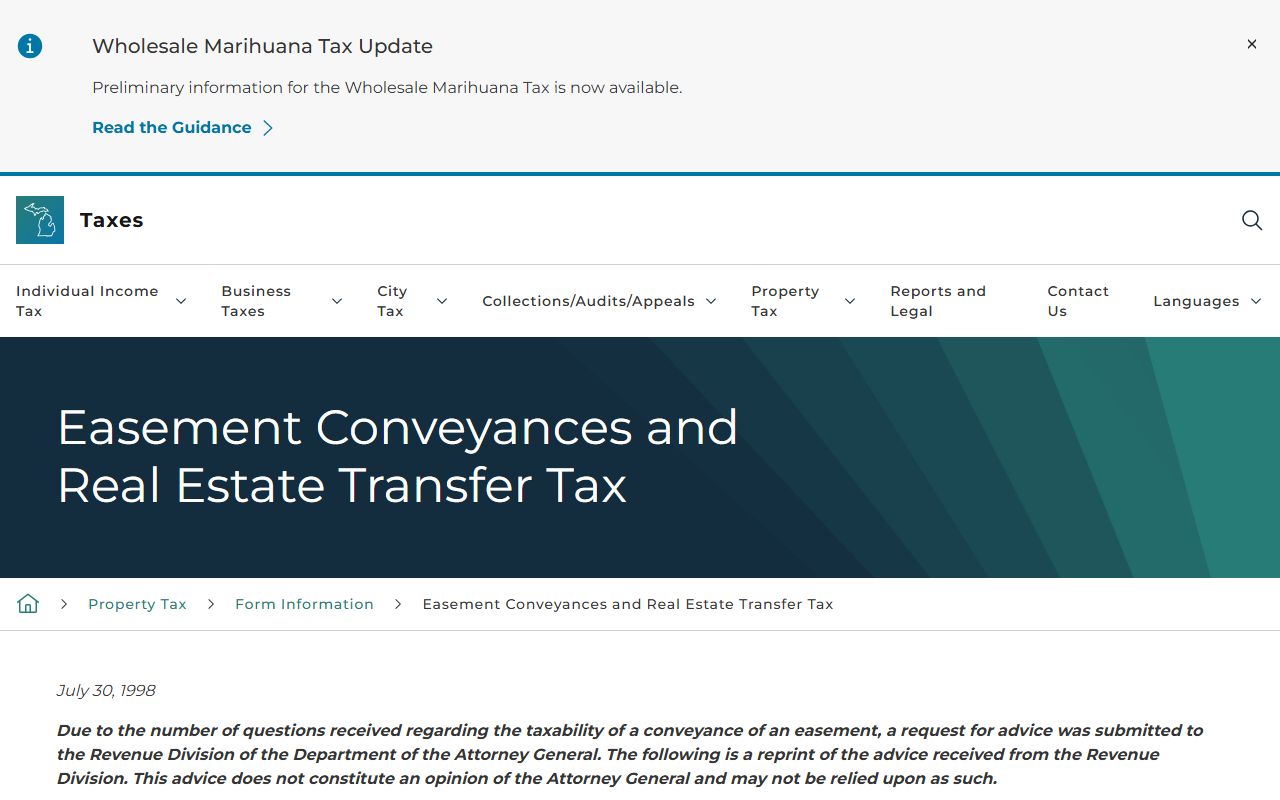
Review this Treasury resource if your transaction involves an easement or right-of-way in St. Joseph County.
Common Document Types at the St. Joseph County Register of Deeds
Warranty deeds and quitclaim deeds are the most commonly recorded documents in St. Joseph County. A warranty deed includes a full guarantee from the seller that the title is clear of claims. A quitclaim deed transfers whatever interest the grantor holds, with no guarantee of any kind.
The office also records mortgages, mortgage discharges, land contracts, assignments of mortgage, easements, and judgment liens. Land contracts are common in rural parts of St. Joseph County, where buyers and sellers sometimes prefer to handle financing privately rather than through a bank. Under a land contract, the seller retains title until the purchase price is paid in full.
If you paid off a mortgage and the lender has not recorded a discharge, contact the lender right away. An unreleased mortgage shows up as a lien on the title and can block future sales or refinancing. The St. Joseph County Register of Deeds office can confirm whether a discharge has been recorded for a particular loan.
Nearby Counties
St. Joseph County borders several other Michigan counties, each maintaining its own Register of Deeds for local property records.