
Lapeer County Deed Records Search
Lapeer County deed records are filed and maintained at the Register of Deeds office at 287 W. Nepessing Street in Lapeer, where the office records all property transfers, mortgages, liens, easements, and other land instruments for the county. Researchers and property owners can search recorded documents online or visit the office in person during regular business hours.
Lapeer County Deed Records
Lapeer County Register of Deeds
The Register of Deeds office is at 287 W. Nepessing Street, Suite 1, Lapeer, MI 48446. The phone number is 810-667-0211 and the fax is 810-667-0293. The department page is available at lapeercountyweb.org.
The office is responsible for recording all instruments affecting title to real property in Lapeer County. Warranty deeds, quitclaim deeds, land contracts, mortgage documents, discharge of mortgage, liens, easements, and subdivision plats are all recorded here. Each document is date-stamped, assigned a document number, and indexed by grantor and grantee name upon acceptance.
Lapeer County is one of the counties east of Oakland and Macomb, with a mix of rural land, subdivisions, and lakefront properties that generate a steady volume of deed transactions each year. The office handles recording for all townships and cities within the county boundaries.
The screenshot below shows the Lapeer County Register of Deeds department page, where you can find the online search tool, recording requirements, and office contact information.

The department page provides current information on recording fees, document submission requirements, and links to the online search portal for Lapeer County property records.
Online Record Search and Document Access
Lapeer County provides online search access to its deed index. You can search by grantor or grantee name to find recorded instruments tied to a specific person, company, or entity. The online index covers the modern recording era and allows you to view document images for instruments recorded in the digital era.
For title research on older properties, the office maintains grantor-grantee index books and microfilm copies that predate the digital system. In-person visits or written requests are needed to access these older materials. Staff can assist you in navigating the older index books during office hours.
The screenshot below shows the Lapeer County Michigan government website, which links to the Register of Deeds and other county departments.

From the main county site you can also reach the Treasurer's office for current tax status information and the Equalization department for assessed value data, both of which are often needed alongside deed research.
Recording Fees and Transfer Tax
The recording fee in Lapeer County is $30 per document, as set by MCL 600.2657. This is a flat fee that applies regardless of the document's page count. Copy fees are $1.00 per page for uncertified copies. Certified copies cost $5.00 in addition to the per-page copy fee.
Real estate transfer tax must be paid at the time a deed is recorded. The state levies $3.75 per $500 of consideration, and the county adds $0.55 per $500, bringing the total to $8.60 per $1,000. A valuation affidavit is required with every deed. It must show either the full consideration paid or the specific legal basis for claiming a transfer tax exemption.
If the transfer is exempt, you still pay the $30 recording fee. The transfer tax exemption only covers the tax itself, not the recording charge. Common exemptions include transfers to a spouse, transfers where the consideration is $100 or less, and certain government conveyances. The affidavit must clearly identify which exemption applies.
Document Formatting Rules
MCL 565.201 sets the formatting rules every deed must follow to be accepted at the Register of Deeds. The first page must have a 2.5-inch blank margin at the top. All other margins on all pages must be at least 0.5 inches. The body text must be at least 10-point type. These requirements exist so the county can apply its recording stamp without obscuring any content.
The deed must list the name and address of the preparer. It must state the return address for the recorded document. It must include the tax parcel identification number for each parcel described. The legal description must be accurate and complete. A deed that omits any of these required elements will be rejected.
The Register of Deeds office cannot advise on how to draft a deed or correct a rejected document. If your deed is turned away, you need to work with a licensed attorney or title professional to make the necessary corrections. Submitting a properly prepared deed from the start avoids delays and saves money.
E-Recording in Lapeer County
Lapeer County accepts electronically submitted documents under Michigan's MURPERA statute, MCL 565.841. This law gives e-recorded documents the same legal force as paper instruments and authorizes counties to work with approved electronic recording vendors.
Approved vendors for Michigan e-recording include Simplifile (1-800-460-5657), ePN, CSC, and Indecomm. Title companies, closing agents, and law firms use these platforms to submit documents from their offices without courier runs to the courthouse. The $30 recording fee and any transfer taxes are paid through the vendor platform at submission. Documents processed by e-recording are typically returned the same business day.
For firms that record frequently in Lapeer County, setting up an escrow or prepaid account with the county can streamline the payment process. Ask the office for details on account setup during regular business hours.
Michigan Race-Notice Recording Law
Michigan is a race-notice state. The first person to record a deed wins against competing unrecorded claims, provided that person had no prior knowledge of the unrecorded claim and paid fair value for the property. This rule makes recording your deed immediately after closing legally significant, not just procedurally useful.
A deed that is signed but not recorded offers no protection against a subsequent buyer or lender who records first without knowledge of the prior transfer. Title companies conduct searches at the Register of Deeds to confirm that the seller's deed is in the public record and that no competing claims exist before issuing title insurance to a new buyer or lender.
Lapeer County's grantor-grantee index is the official public record of all property transfers in the county. The recording date and document number assigned at filing establish the legal priority of the instrument. Confirming that your deed has been properly recorded and indexed should be a standard step after any real estate closing.
The Michigan Treasury's information on delinquent tax funds is also relevant to property research in Lapeer County, since tax liens can affect title to property recorded at the Register of Deeds.
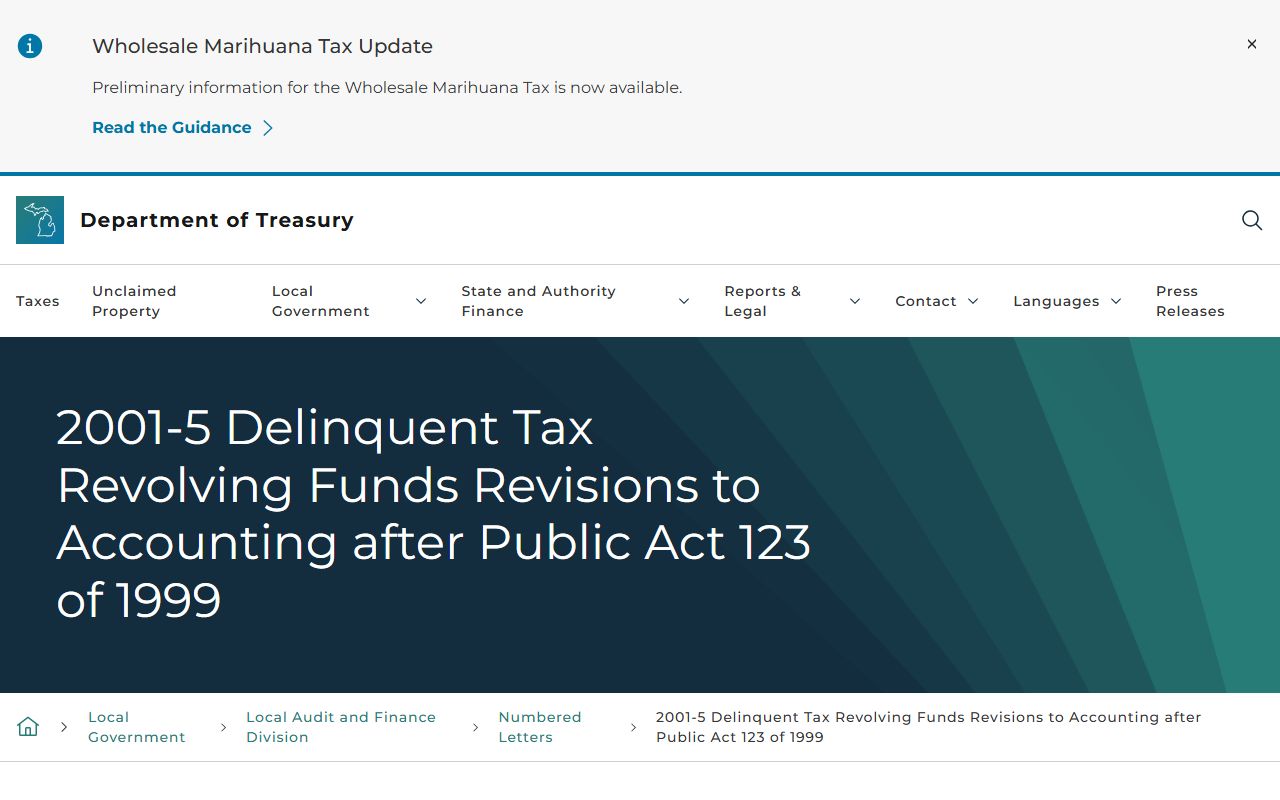
Checking for delinquent tax status alongside a deed search gives a fuller picture of any liens or encumbrances that may affect clear title to property in Lapeer County.
Nearby Counties
Lapeer County borders several southeast Michigan counties, each with its own Register of Deeds for property records research.