
St. Clair County Deed Records Search
St. Clair County deed records are filed and maintained at the Register of Deeds office in Port Huron, where all property transfers, mortgages, liens, and other land instruments for the county are recorded and indexed. The office offers online record search access, a Property Fraud Alert program to help property owners monitor their titles, and e-recording for attorneys and title professionals.
St. Clair County Deed Records
St. Clair County Register of Deeds Office
The St. Clair County Register of Deeds is at 201 McMorran Blvd., Port Huron, MI 48060. Call 810-989-6960 during business hours to ask about recording requirements, document status, or copy requests. The county website at stclaircounty.org provides information on services and may have links to the online search portal.
The office records all instruments that affect real property in St. Clair County. Warranty deeds, quitclaim deeds, mortgages, land contracts, easements, discharge of mortgage, and judgment liens all go through this office. Each document is stamped, indexed, and made part of the permanent public record.
St. Clair County sits along the eastern edge of Michigan's Lower Peninsula, bordering Lake Huron and the province of Ontario across the St. Clair River. The county's location makes it a mix of residential, agricultural, and waterfront property types, all of which generate deed activity that flows through this office.
Recording Fees and Copy Costs
The flat recording fee in St. Clair County is $30 per document. This applies regardless of page count. The rate is set by state law under MCL 600.2657, which standardized recording fees across Michigan on October 1, 2016.
Copies are $1.00 per page. Certified copies require an additional $5.00 certification fee. Certified copies are commonly needed for legal proceedings, lender requirements, or estate matters. You can get copies in person or by mailing a request with the document details and payment.
Call the office before mailing to confirm current payment options. Some offices accept personal checks; others require money orders for mail requests. Getting this right the first time avoids delays.
Real Estate Transfer Tax
Michigan collects a transfer tax on most real property sales. The state rate is $3.75 per $500 of value, and St. Clair County adds $0.55 per $500. The combined rate is $8.60 per $1,000 of the sale price. The seller usually pays this at closing.
A valuation affidavit is required with any deed that transfers property for consideration. The affidavit states the actual sale price so the correct tax can be calculated. The Register of Deeds will not record a deed subject to transfer tax without this form. Make sure the affidavit is complete and signed before bringing the deed to the office or submitting it electronically.
Certain transactions are exempt from transfer tax. These include transfers between spouses, transfers to or from government entities, and some transactions involving foreclosures or family members. If an exemption applies, note it on the deed and attach the proper affidavit. A real estate attorney or title company can help you confirm the exemption before filing.
How to Record a Deed in St. Clair County
Michigan law sets out formatting requirements for recorded documents under MCL 565.201. Deeds and other instruments that do not meet these rules can be rejected. The Register of Deeds will not correct your document for you.
Requirements include a 2.5-inch margin at the top of the first page, at least 0.5-inch margins on all other sides, and a font size of at least 10 points. The first page must identify the document type, all parties by name, the legal property description, and the address where tax statements should be sent. The preparer's name and address must also appear.
Documents may be submitted in person, by mail, or electronically through an approved vendor. In-person submissions are usually processed the same day. E-recording is available and is generally the fastest option for legal and title professionals. After recording, the document is stamped with the date, time, liber number, and page number.
E-Recording and Property Fraud Alert
St. Clair County accepts electronic recording through approved vendors. Title companies, lenders, and attorneys can submit documents without coming to the office in person. The document is processed and returned electronically, usually within one business day.
Approved e-recording vendors include Simplifile (1-800-460-5657), ePN, CSC, and Indecomm. Contact any of these vendors to open an account. St. Clair County's adoption of e-recording is authorized by the Michigan Uniform Real Property Electronic Recording Act, found at MCL 565.841.
St. Clair County also offers a Property Fraud Alert program. This free service notifies property owners by email or text when a document is recorded against their property. It is a useful tool for catching fraudulent deed transfers early. Property owners can sign up through the county or through the alert provider. The program does not prevent fraud, but it does give you notice so you can act quickly if something looks wrong.
The Michigan Treasury provides guidance on change of ownership reporting requirements that apply to every property transfer in St. Clair County. The image below shows part of those guidelines.
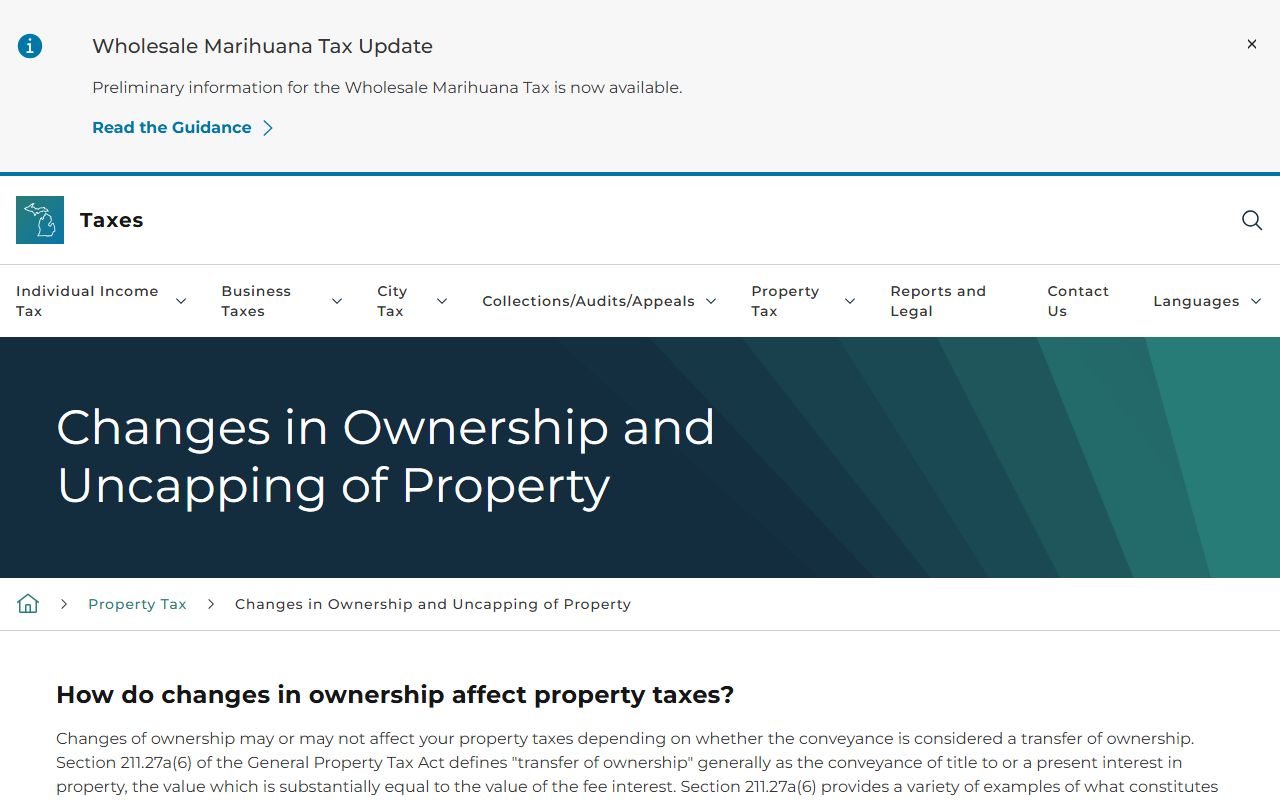
After recording, the buyer has 45 days to file a Property Transfer Affidavit with the local assessor. Missing this deadline can result in a penalty.
Searching St. Clair County Deed Records Online
St. Clair County offers online access to deed records through its county website. The online portal allows you to search by grantor or grantee name, document type, or recording date. This is a convenient option if you need to search records without visiting the office in person.
Visit stclaircounty.org and look for the Register of Deeds section to find the current link to the online search system. Online records may not include the oldest historical documents, so in-person searches may be needed for very old records.
Michigan is a race-notice state. Recording promptly after closing matters. If two people receive deeds to the same property, the one who records first and has no notice of the other claim wins. Do not sit on a signed deed. Get it recorded as soon as possible after closing.
The Michigan Treasury also publishes information on transfer tax rules for easement conveyances, which affect many St. Clair County waterfront and agricultural properties.
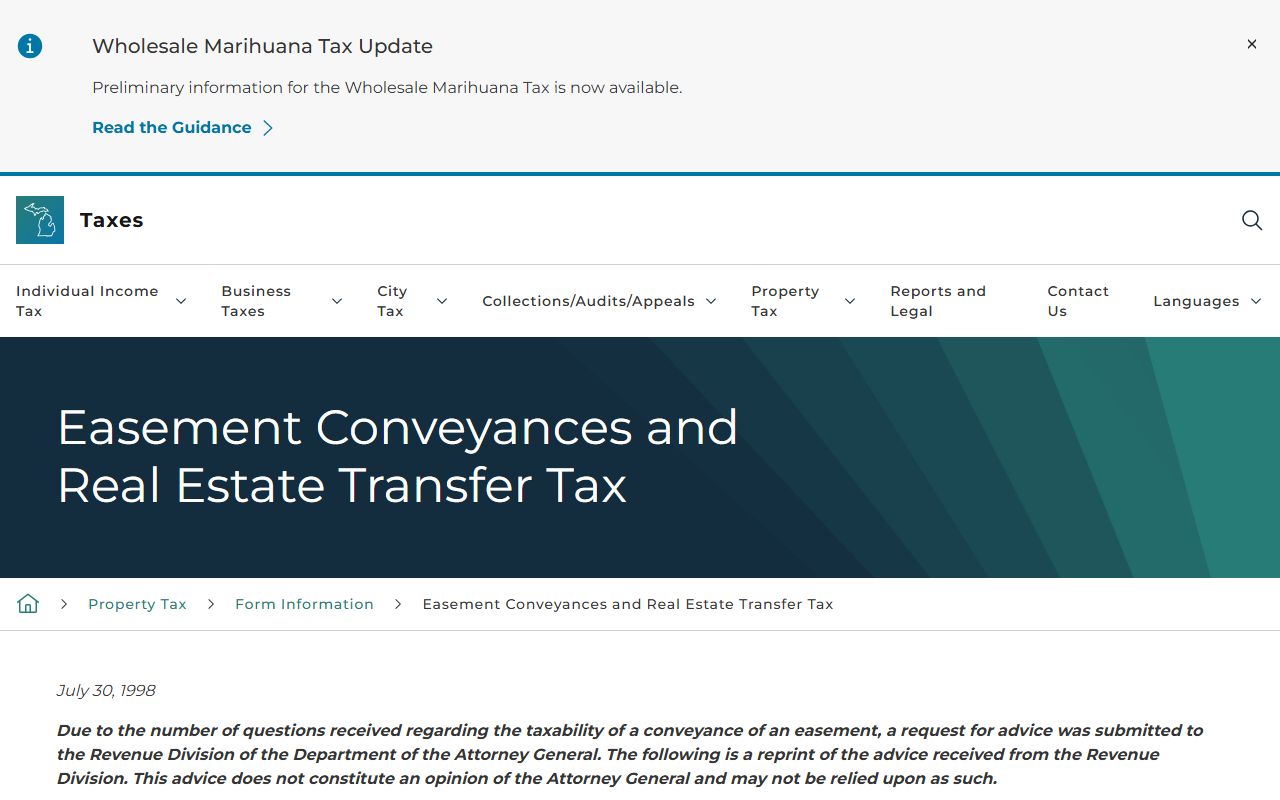
If your property transaction involves an easement or right-of-way, review this resource or consult an attorney to determine whether transfer tax applies.
Common Deed Types Recorded in St. Clair County
The Register of Deeds handles many document types. The most common are warranty deeds and quitclaim deeds. A warranty deed comes with a seller's guarantee that the title is clear. A quitclaim deed transfers the grantor's interest without any guarantee about the title's condition.
Other recorded documents include mortgages, land contracts, mortgage releases, assignments of mortgage, easements, mechanic's liens, and judgment liens. Each type serves a different purpose. All of them must be recorded to be effective against future buyers or lenders who do not have prior notice of the claim.
When a mortgage is satisfied, the lender must record a discharge or release. If you paid off a loan and no discharge appears in the records, contact your lender right away. A title with an unreleased mortgage is considered clouded and can block a future sale or refinance. The St. Clair County Register of Deeds office can confirm whether a discharge has been recorded for any given mortgage.
Nearby Counties
St. Clair County borders several other Michigan counties, each with its own Register of Deeds office for property records.