
Rochester Hills Deed Records Search
Deed records for Rochester Hills, Michigan are filed with the Oakland County Register of Deeds, located in Pontiac. Every transfer of real property in Rochester Hills, whether a standard sale, a quitclaim transfer, a land contract, or a mortgage, must be recorded at the county level. The city does not hold deed records itself, but the Rochester Hills City Assessing office at 1000 Rochester Hills Drive maintains parcel-level ownership and valuation data that complements what you find in the county deed index. Oakland County's free online search at ocmideeds.com covers around 18 million records and is available to anyone without a fee.
Rochester Hills Deed Records
Oakland County Register of Deeds
The Oakland County Register of Deeds is at 1200 N. Telegraph Rd., Pontiac, MI 48341. The phone is 248-858-0590. The office is part of the Oakland County Clerk/Register of Deeds and handles recording for all Oakland County municipalities, including Rochester Hills. This is where every deed, mortgage, assignment, release, and lien affecting a Rochester Hills parcel is submitted, indexed, and stored.
Oakland County built one of the more capable public deed search systems in Michigan. The free portal at ocmideeds.com holds roughly 18 million recorded documents. Searches can be done by grantor name, grantee name, instrument type, or document number. Images of many recorded instruments are available to view and download at no cost. For researchers working on Rochester Hills properties, this often means you can do a complete initial search without visiting Pontiac.
The county also runs a Property Record Notification program, called PRN. It's a free service that sends email alerts whenever a new instrument is recorded against a property you specify. Rochester Hills homeowners can sign up to monitor for fraudulent deeds or unauthorized liens on their property. Given the relatively high volume of transactions in the area, the service provides useful peace of mind at no cost.
Recording Fees and Transfer Tax
The recording fee for most deeds filed in Oakland County is $30, set by state law under MCL 600.2657. That flat fee applies whether you submit in person, by mail, or electronically. Copies of recorded instruments cost $1 per page. Certified copies add a $5 certification fee. If you need several pages certified, the total adds up quickly, so ask the office whether a plain copy will serve your purpose before paying for certification.
Michigan's combined state and county transfer tax runs $8.60 per $1,000 of the sale price. For a Rochester Hills home selling at $350,000, the transfer tax total would be $3,010. Some transfers are exempt. Transfers between spouses, certain family transactions, transfers resulting from divorce, and foreclosure-related conveyances may qualify for exemption. Always check with your title company or attorney about whether the transfer tax applies to your specific transaction before closing.
Michigan operates as a race-notice state. The first to record in good faith wins priority. For Rochester Hills buyers, this means recording should happen as soon as possible after closing. A deed sitting unrecorded is legally invisible to later buyers and lenders, and the recording date determines your priority over competing claims.
Rochester Hills City Assessing Office
The Rochester Hills City Assessing office is at 1000 Rochester Hills Drive, Rochester Hills, MI 48309. You can reach it at 248-656-4605. Hours are 8 a.m. to 5 p.m. The assessor maintains current ownership, assessed value, and property characteristics for all parcels in the city. Michigan law requires property to be assessed at 50% of true cash value, and the Rochester Hills assessor applies that standard across all residential, commercial, and industrial parcels in the city.
When a Rochester Hills property changes hands and a deed is recorded at the county level, the new owner must file a Property Transfer Affidavit (Form 2766) with the city assessor within 45 days. This form is separate from the recording process and must be submitted to the city, not the county. Filing on time matters because it affects whether Michigan's taxable value cap gets reset. If you miss the deadline, you may lose some assessment protections that would have applied to the new ownership.
Property information for Rochester Hills parcels is available through the Oakland County Property Gateway, a web-based tool that pulls from county systems and provides parcel maps, ownership data, and assessment information. That gateway works well alongside the ocmideeds.com deed search when you need both recorded documents and current parcel data in one research session.
Deed Formatting Requirements Under Michigan Law
Every deed submitted to the Oakland County Register of Deeds must meet the formatting standards in MCL 565.201. The law requires a 2.5-inch top margin on the first page, at least a 0.5-inch margin on other edges, font no smaller than 10 points, and a return address block in the upper right corner of the first page. Documents that fail these requirements are rejected and returned, which delays the recording date.
For Rochester Hills transactions prepared by a licensed attorney or title company, compliance with MCL 565.201 is standard practice. Custom-drafted instruments, such as transfers between family members without professional help, sometimes run into formatting problems. If you're preparing your own deed, review the statute carefully or use a professionally formatted template before submitting.
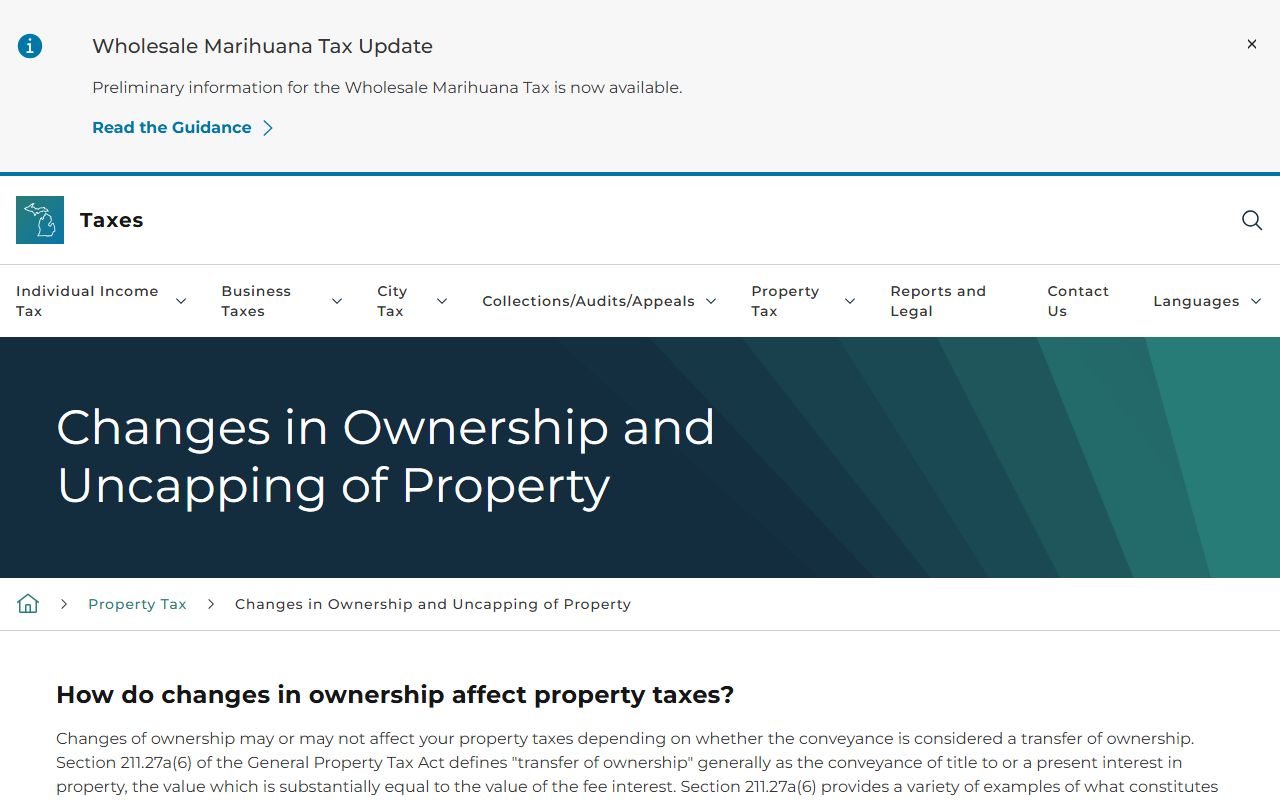
The screenshot below shows Michigan Treasury guidance on change-of-ownership reporting, which applies directly to Rochester Hills deed transfers. The Property Transfer Affidavit requirement and its 45-day deadline are part of the change-of-ownership process that follows every recorded deed transfer.
After the deed is recorded and the Property Transfer Affidavit is filed with the city, you may also want to file for Principal Residence Exemption if the property will be your primary home. That filing goes to the city assessor as well and affects the property tax rate going forward.
Electronic Recording and MURPERA
Michigan's Uniform Real Property Electronic Recording Act, at MCL 565.841, gives Oakland County legal authority to accept electronically submitted deed documents. The county uses e-recording platforms including Simplifile, ePN, CSC, and Indecomm. Title companies and lenders handling Rochester Hills closings regularly use these services to submit deeds and mortgages electronically on the day of closing. The process works the same as paper recording from a legal standpoint. The Register of Deeds reviews, accepts, and indexes the document, and the confirmed recording data comes back through the platform.
E-recording is faster than mailing documents and avoids the delay that comes from an in-person trip to Pontiac. For Rochester Hills transactions where same-day recording matters, such as when a related mortgage needs to record in a specific order, e-recording is the standard approach.
Delinquent Taxes and Title Research
Checking for delinquent taxes is a separate step from searching deed records, but it's equally important for Rochester Hills property research. Michigan's tax forfeiture and foreclosure process can result in a county treasurer's deed if taxes go unpaid long enough. Properties that have gone through that process will have a treasurer's deed in their chain of title, which shows up in the ocmideeds.com index.
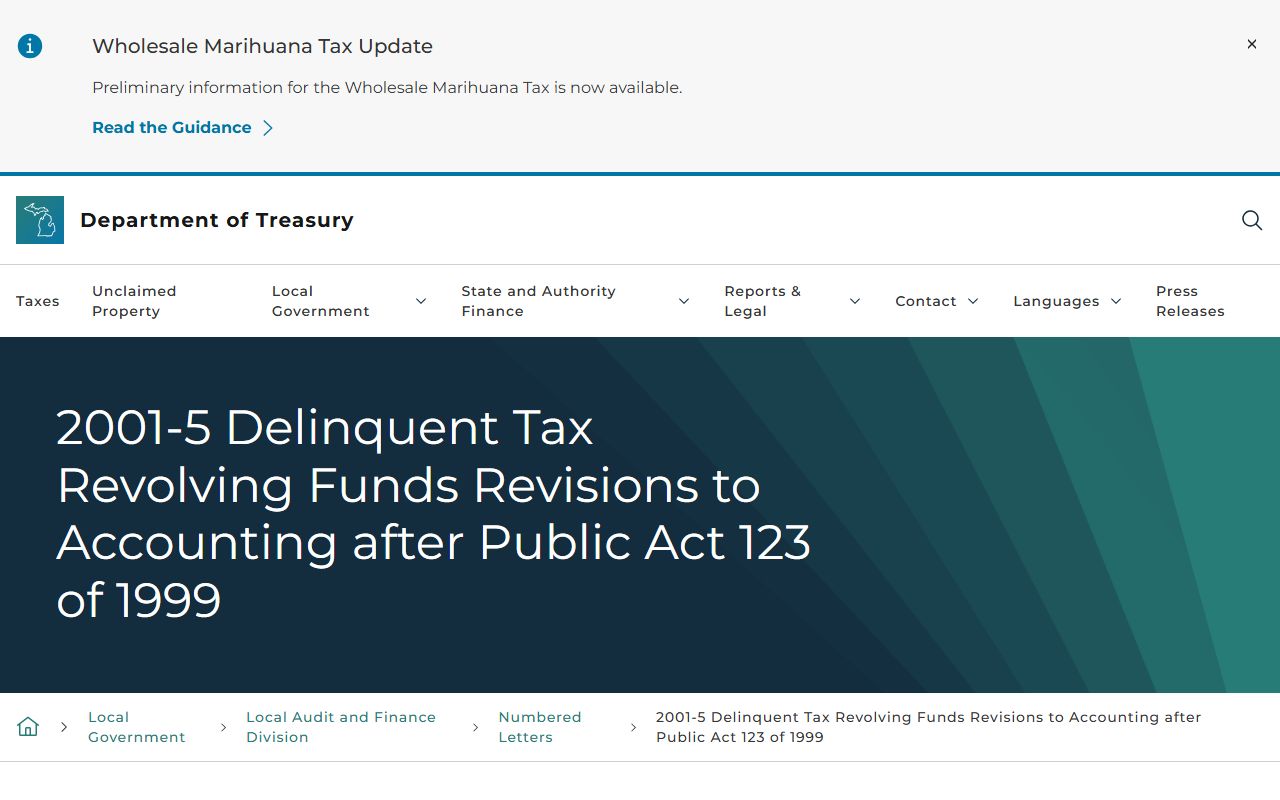
The screenshot below shows Michigan Treasury information about delinquent tax procedures statewide, including the timeline for forfeiture and foreclosure that applies to Rochester Hills parcels.
You can check current tax status and any delinquent amounts through the Oakland County Treasurer's office, which operates separately from the Register of Deeds. The Oakland County Property Gateway also pulls some tax information and can be a useful first check before a deeper dive into the treasurer's records.
Easements and Conveyances in Rochester Hills
Rochester Hills has a substantial number of residential subdivisions, many of which include utility easements, drainage easements, and private road agreements recorded alongside the original plat. When you search deed records for a Rochester Hills parcel, it's worth reviewing not just warranty deeds and mortgages but also any easement agreements or restrictions that run with the land.
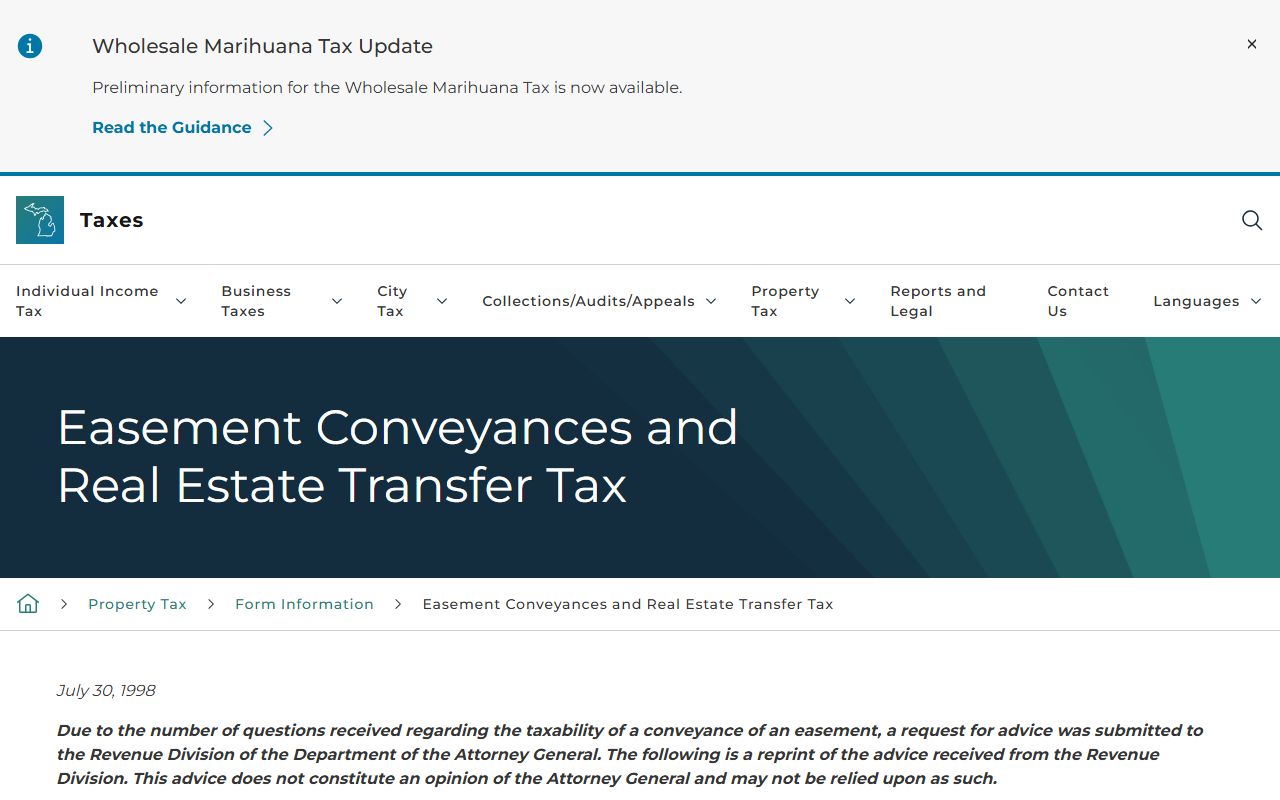
The screenshot below shows Michigan Treasury guidance on easement conveyances and related tax reporting, which is useful background for understanding how easements are treated as part of property transfers in Michigan.
Easements recorded in Oakland County appear in the same index as deeds and mortgages. The ocmideeds.com search returns all document types for a given grantor, grantee, or parcel, so you can find easement agreements alongside standard conveyances in a single search session. If a property description references an easement for ingress and egress or utility access, finding and reading that recorded instrument tells you the scope and terms of the easement before you finalize a purchase.
Nearby Cities
Other Michigan cities in the Oakland County area with deed records pages on this site are listed below.