
Farmington Hills Deed Records
Deed records for properties in Farmington Hills, Michigan are filed with the Oakland County Register of Deeds, which maintains a free public database of approximately 18 million recorded instruments going back to the 1800s. Farmington Hills is one of Oakland County's largest and most active real estate markets, so the county office processes a steady volume of new deed recordings, mortgage filings, and discharges for properties throughout the city each year. The city's own assessing department also keeps local property data that can supplement what you find in the county deed index.
Farmington Hills Deed Records
Oakland County Register of Deeds
The Oakland County Register of Deeds is located at 1200 N. Telegraph Rd., Pontiac, MI 48341. The phone number is 248-858-0590. Additional information about services, hours, and fees is available through the Oakland County ROD page. This office serves as the legal custodian of all recorded property documents in the county, including those for every parcel within Farmington Hills.
Oakland County's deed recording system is one of the most extensive in Michigan. The free online search tool at ocmideeds.com provides access to approximately 18 million instruments. You can search by grantor or grantee name, parcel identification number, legal description, or instrument type. The database covers records going back to the 1800s, making it useful for both recent closings and long-range title research.
If you need copies of documents found in the online index, they can be ordered at $1 per page. Certified copies are $5 each. For routine requests, the Pontiac office can process copies during regular business hours. Larger requests may benefit from a call ahead so staff can prepare materials in advance.
PRN Property Fraud Alerts
Oakland County provides a free Property Records Notification (PRN) service that alerts you by email whenever a document is recorded in the county under your name. For Farmington Hills property owners, this is a practical safeguard against deed fraud, which involves recording a fake or unauthorized deed to transfer apparent ownership of someone's property without their consent.
The county must record any document that meets the formatting requirements under state law, even if the underlying transfer is fraudulent. The PRN system can't stop a fraudulent recording, but it gives you notice quickly so you can take legal action. An attorney can help you file a claim to void a fraudulent deed and restore your ownership record. Setting up the alert costs nothing and only takes a few minutes through the county's website.
If you own multiple properties in Oakland County, all of them can be registered under a single PRN account. The system sends individual alerts for each property where a document is recorded under your name. Given how active the Farmington Hills real estate market is, keeping tabs on recordings tied to your name is a reasonable precaution.
The image below shows the Farmington Hills city website, which includes links to assessing records and property-related department contacts.

The city's assessing page provides access to local parcel data, Document Library materials, and exemption information that work alongside the deed records held at the county level.
City of Farmington Hills Assessing
The Farmington Hills Assessing Department can be reached at 248-656-4605. The department maintains local property records for all parcels in the city, including ownership data, assessed values, and exemption status. When a deed is recorded at the Oakland County ROD, the assessing office updates its own records to reflect the new owner. If you've recently recorded a deed for a Farmington Hills property and the city's assessment records haven't caught up yet, the assessing office is the right place to follow up.
The city's website at fhgov.com includes a Document Library with forms and information relevant to property owners, including Principal Residence Exemption applications, Property Transfer Affidavit forms, and other documents commonly needed after a property transfer. These materials are separate from the county deed index but are part of the post-closing paperwork that property owners need to take care of.
Farmington Hills uses a local assessing process to determine taxable values for all properties within its boundaries. The assessed value is one factor in calculating annual property taxes. If you think your assessment is wrong, you can appeal to the Board of Review or the Michigan Tax Tribunal. The assessing department can explain the appeal process and the timeline for filing a challenge.
Recording Requirements and Fees
All deeds recorded in Oakland County must comply with the formatting standards in MCL 565.201. The rules cover font size minimums, margin requirements, and required placement of the preparer's name and the return address for the original document after recording. A deed that fails to meet these standards can be returned to the sender or accepted with a non-standard recording surcharge, which adds to the cost of recording.
The flat recording fee is $30 per document. Michigan imposes a combined real estate transfer tax of $8.60 per $1,000 of the sale price or the property's true cash value, whichever is higher. This total includes both the state-level and county-level portions of the tax. Some transfers are exempt, including transfers between spouses, certain trust transfers, and other categories defined in state statute.
E-recording is available in Oakland County through approved vendors such as Simplifile, ePN, CSC, and Indecomm. The Michigan Uniform Real Property Electronic Recording Act (MCL 565.841) gives electronically submitted documents the same legal standing as paper originals. Title companies and law firms in the Farmington Hills area routinely use e-recording to avoid mailing delays.
Property Transfer Affidavit Requirements
When a deed for a Farmington Hills property is recorded and ownership changes, the new owner is required by state law to file a Property Transfer Affidavit with the Farmington Hills Assessing Department within 45 days of the transfer date. This requirement applies to virtually all property transfers, including sales, gifts, and transfers into or out of a trust when the beneficial ownership changes.
The affidavit triggers a review of the property's taxable value by the local assessor. In Michigan, a property's taxable value is normally capped and can only increase by a limited percentage each year. When ownership transfers, the cap is lifted and the taxable value is reset to the assessed value, which is typically half of the market value. This "uncapping" can significantly increase annual property taxes for the new owner.
Most title companies and attorneys handle the affidavit filing as part of the closing process, but in private transfers handled without professional help, the buyer needs to take care of it. The Farmington Hills Assessing Department can provide the form and answer questions about completing it. Filing is done directly with the city, not with the county ROD.
Michigan Deed Law and Chain of Title
Michigan is a race-notice state. The first buyer to record a deed wins the legal ownership dispute, as long as they had no prior notice of another competing claim. This rule makes prompt recording essential. A buyer who closes on a Farmington Hills property and waits several days to record the deed takes on real legal risk during that window.
Tracing the chain of title for a Farmington Hills property starts with the current deed and works backward through the Oakland County deed index. Oakland County's records go back to the 1800s, so most residential title searches can be completed entirely through the ocmideeds.com database without needing to pull physical records from storage. For properties with complicated histories, county staff can assist with locating older instruments.
Michigan Treasury guidelines on ownership changes apply to Farmington Hills properties and explain how the uncapping of taxable value works when a deed is recorded.
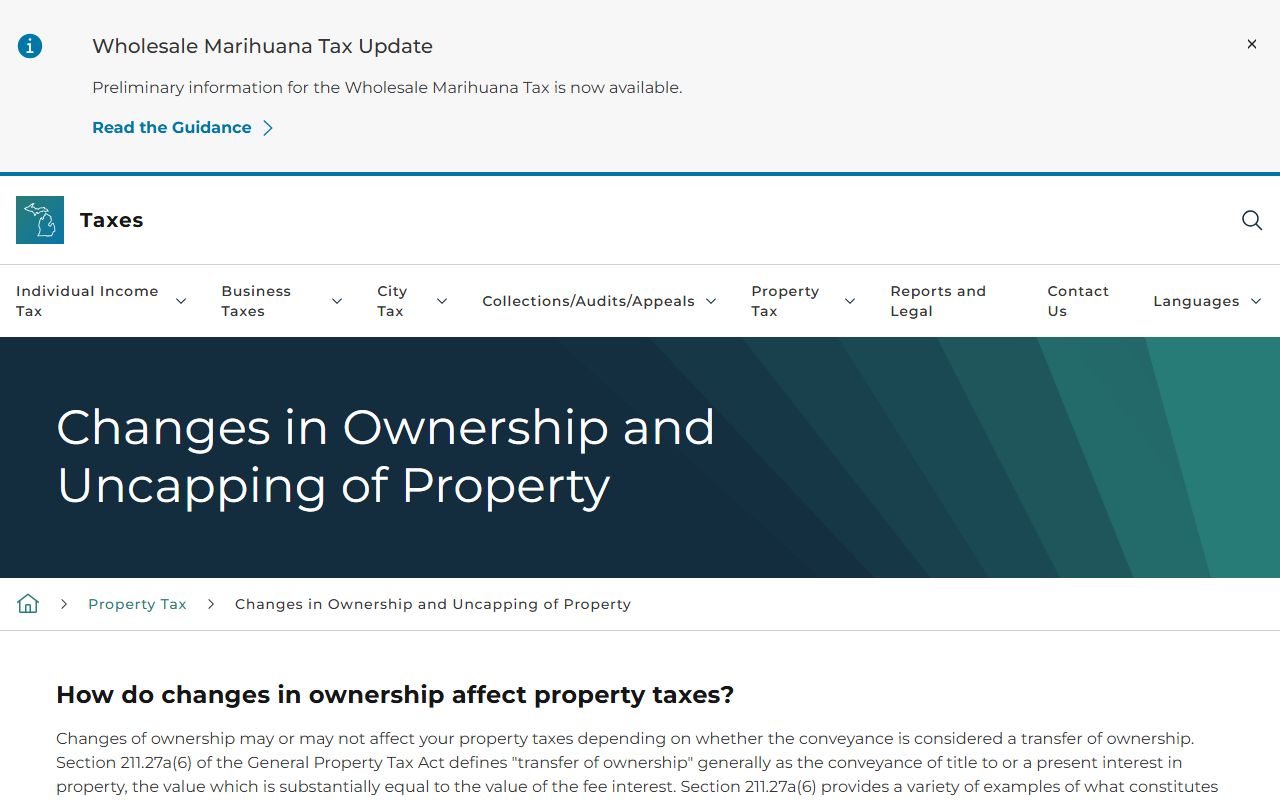
Understanding how state ownership-change rules interact with local assessment practices is important for any buyer or investor working with Farmington Hills properties.
Easements and Additional Recorded Instruments
Deed research for Farmington Hills properties shouldn't stop at the deed itself. Easements, covenants, and restrictions that affect how a property can be used are also recorded in the county deed index and appear alongside deeds in the ocmideeds.com search results. Utility easements, shared driveway agreements, and homeowner association restrictions are all types of instruments that can show up in a title search and that affect the property's use and value.
Plat maps are another recorded document type that affects Farmington Hills properties, particularly in subdivisions. When a developer creates a subdivision, the plat is recorded at the county level and establishes lot boundaries, easements, and public right-of-way dedications. If you're researching a Farmington Hills parcel in a platted subdivision, pulling the plat is a standard part of a thorough title search.
Mortgages, liens, and discharges are also recorded at the county level and appear in the same deed index. A lien search covers all recorded instruments against a property, not just the deed. Before closing on a Farmington Hills property, a full lien search through the Oakland County ROD is standard practice. Unpaid liens can survive a sale and become the new owner's obligation, which is one reason title insurance is typically purchased at closing.
Michigan Treasury information on easement conveyances and related tax obligations is relevant for Farmington Hills properties where easements are part of the title research.
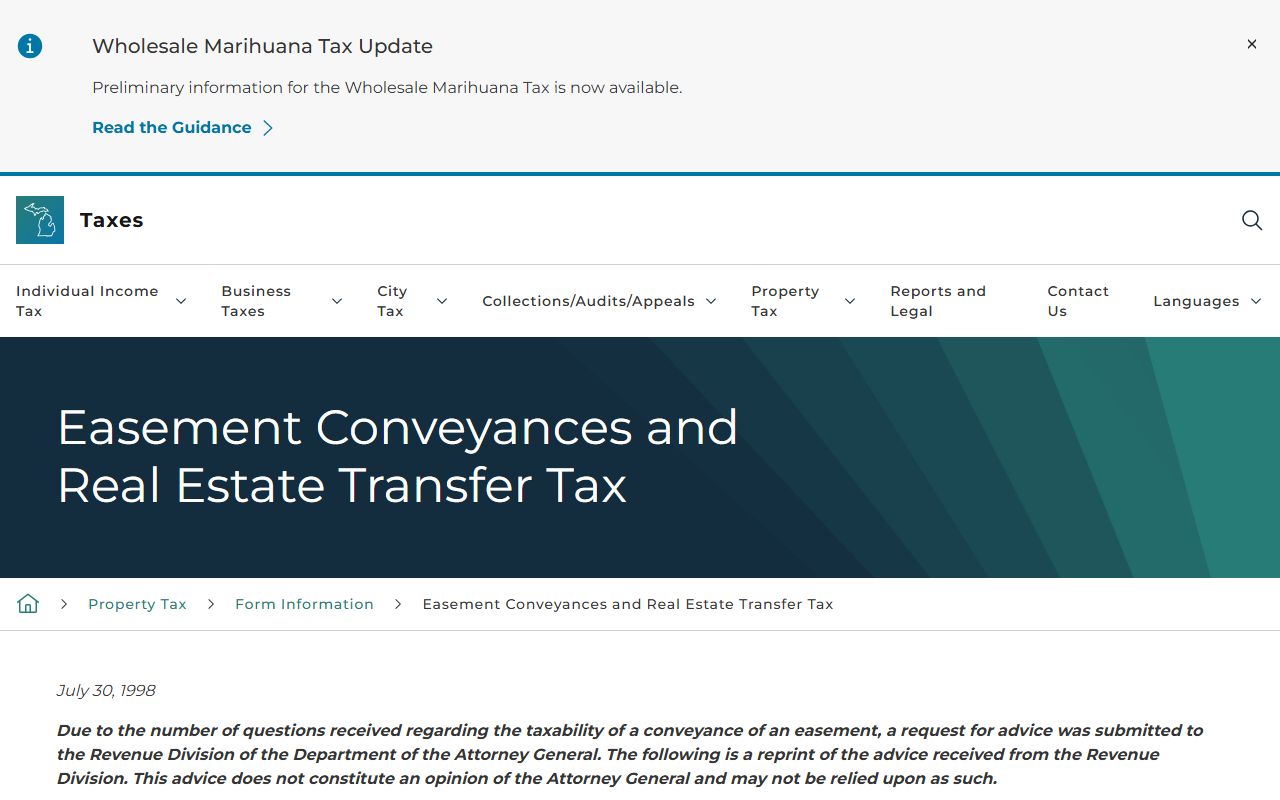
Easements that convey property rights can sometimes trigger transfer tax obligations, so it's worth reviewing the Treasury guidance if your research involves these types of recorded instruments.
Nearby Cities
Other qualifying cities near Farmington Hills have their own deed records information pages.