
Canton Township Deed Records Lookup
Deed records for Canton Township, Michigan are filed and maintained by the Wayne County Register of Deeds, located in Detroit, which serves as the official repository for all recorded property instruments across Wayne County. Warranty deeds, quitclaim deeds, land contracts, mortgages, easements, and other instruments recorded against Canton Township parcels are indexed and retrievable through that office. This page explains how to search and order copies, what fees apply, how local township offices can add to your property research, and what other recorded instruments might affect title on a Canton Township property.
Canton Township Deed Records
Wayne County Register of Deeds
The Wayne County Register of Deeds handles all deed recordings for Canton Township. The office is at 400 Monroe St., 5th Floor, Detroit, MI 48226, and the phone number is 313-224-5857. The official website is at waynecounty.com/departments/register-of-deeds.
Wayne County's office is organized into a Real Property Division and a Personal Property Division. For Canton Township deed research, the Real Property Division is the relevant section. That division processes and indexes deeds, mortgages, liens, easements, restrictive covenants, and related instruments. The index is searchable by grantor name, grantee name, document type, and date range.
The Wayne County Register of Deeds offers a Property Fraud Alert program that sends notifications to enrolled property owners whenever a new document is recorded against their address. Deed fraud is a genuine risk, particularly for rental properties and vacant land. Canton Township property owners can sign up through the county's website at no cost. Alerts arrive by email or text and give owners a chance to respond quickly if something looks wrong.
E-recording through platforms like Simplifile, ePN, CSC, and Indecomm is available for Wayne County filings. Title companies, lenders, and law firms that regularly record in the county use these platforms for faster turnaround. Wayne County's Land Records search tool also provides online index access for those researching property without visiting in person.
Fees and Transfer Tax
Michigan law under MCL 600.2657 sets the recording fee at $30 per document. This flat rate applies at Wayne County for most real property instruments regardless of page count. Certified copies are $5 per document, and plain copies cost $1 per page. Mail requests are accepted; call 313-224-5857 to confirm the current process before sending payment.
Transfer tax on Canton Township sales totals $8.60 per $1,000 of the sale price, combining the state and county transfer taxes. The seller typically pays this amount at closing. If a transfer qualifies for an exemption, such as a deed between spouses, a deed to a revocable living trust, or a deed in lieu of foreclosure under qualifying conditions, the deed must include a written statement explaining the basis for the exemption. No statement means the full tax will be assessed at recording. This is not something that can be corrected after the fact.
Recording Law and Document Requirements
Michigan's deed formatting statute, MCL 565.201, sets the minimum standards a deed must meet to be accepted for recording. These include prescribed margin sizes, minimum font size, and legible printing. The grantor's signature must be notarized. The grantee's name and current mailing address must appear on the document's face. A deed that fails these requirements will either be rejected at the counter or assessed a non-conforming document fee, depending on the nature of the defect.
Michigan follows a race-notice recording system. Between two competing claimants, the one who records first in good faith and without knowledge of the prior claim wins. This rule protects buyers who record promptly. For Canton Township purchases, the deed should be recorded as soon as possible after closing. Delay creates legal exposure that can rarely be undone after the fact.
The Michigan Uniform Real Property Electronic Recording Act under MCL 565.841 provides that electronically submitted documents have the same legal effect as paper originals. Wayne County accepts e-recorded instruments and processes them through the same indexing system as in-person submissions.
Canton Township Assessing and Local Property Records
Below is a view of the Canton Township website, which provides links to assessing, e-services, permit applications, and other local resources useful for property research.
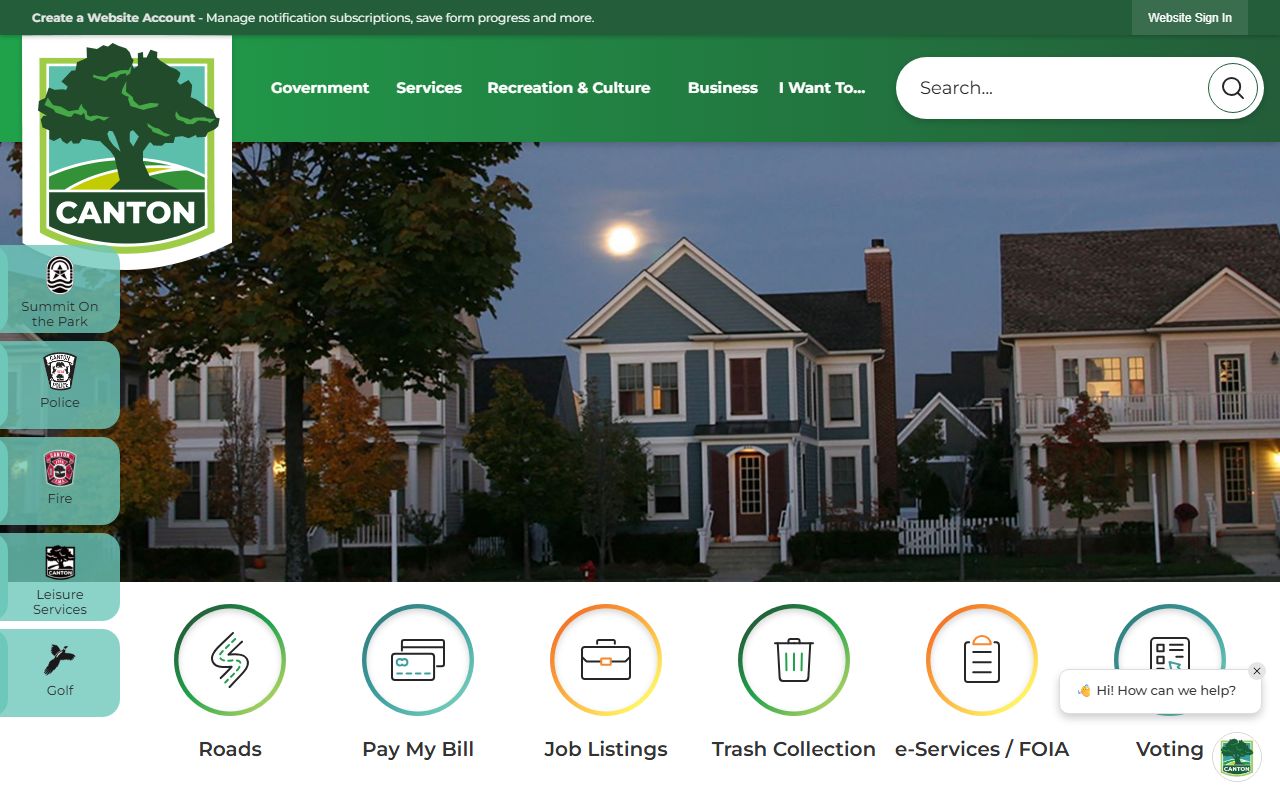
The township's homepage connects residents and researchers to the local departments that maintain records alongside those held by the Wayne County Register of Deeds.
Canton Township's assessing function is overseen by the township's Board of Trustees. The assessing office maintains ownership records, taxable values, assessed values, and parcel data for all properties within the township. When a deed is recorded and a property changes hands, the buyer must file a Property Transfer Affidavit with the local assessor within 45 days. This form triggers an update to the assessor's records and an uncapping of the taxable value. Late filing results in a penalty from the State Tax Commission.
The township holds a March Board of Review each year for property owners who want to appeal their assessed value. Appointments are required. If you recently purchased property in Canton Township and believe the new assessment does not reflect market value, the Board of Review is the first step in the appeal process. Contact the township directly to schedule a time.
E-Services, FOIA, and Online Resources
Here is a look at Canton Township's quick links and online services page, which provides access to permit applications, payments, and other township services relevant to property research.
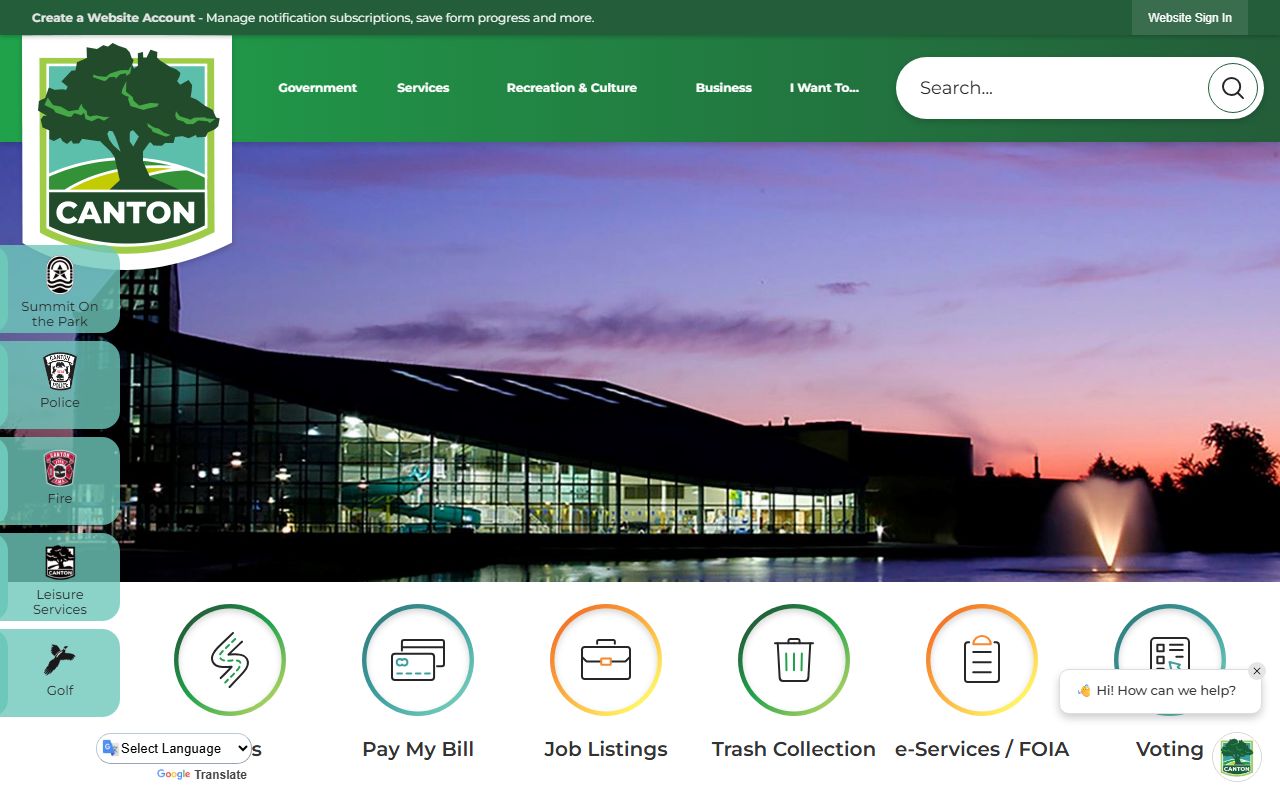
The township's e-services portal at canton-mi.org provides access to FOIA record requests, online payments, and permit applications, all of which can support a comprehensive property review.
Permit records are especially useful when researching a Canton Township property. The township's Building Department maintains records of all permits issued for construction, renovation, electrical work, and demolition. A property with unpermitted additions or alterations can create complications for buyers and lenders. Searching the permit history by address before closing is a straightforward way to spot issues early.
FOIA requests allow access to additional public records not available through the online portals. If you need inspection records, complaints, or older documents not digitized in the main system, a FOIA request to the appropriate department is the standard method.
Title Research and Chain of Ownership
Here is a view from the Canton Township calendar and resources page, which shows additional township services available to property owners and researchers.

Township resources like these can help identify local contacts and scheduled events such as assessment reviews and public hearings that affect property matters.
A chain of title on a Canton Township property runs through the Wayne County Register of Deeds index from the current owner backward through every prior recorded transfer. Each deed in the chain identifies a grantor and grantee, a legal description, and a recording date. Title abstractors and attorneys use this chain to verify that each link is valid and that no gaps or breaks exist that could cloud the current owner's title.
Beyond deeds, a complete title search covers all instruments recorded against each owner during their period of ownership. This includes mortgages that should have been discharged, mechanic's liens from contractors, judgment liens from court actions, and federal tax liens. Each of these can survive a sale if not cleared before closing. The Wayne County Register of Deeds indexes all of these instruments alongside deeds in the same searchable system.
Delinquent Taxes and Other Encumbrances
Delinquent property taxes in Michigan attach to the property as a first-priority lien. The Wayne County Treasurer tracks all delinquent accounts. Properties with two or more years of unpaid taxes enter the county foreclosure process under Michigan's General Property Tax Act. A buyer who takes title without checking for tax delinquency can inherit that liability. Title insurance policies generally require a clear tax search as a condition of issuance.
Easements recorded against a Canton Township parcel run with the land and bind all future owners. Common examples include utility easements for power lines and gas pipes, drainage easements, and shared access easements for private driveways. These do not appear on the deed itself but are separate recorded instruments searchable in the county index. A thorough review of all recorded instruments, not just deed transfers, is the only way to identify all encumbrances affecting a parcel.
Nearby Cities
These nearby Michigan cities have deed records pages with county office details and local property resources.