
Find Deed Records in Livonia
Deed records for Livonia, Michigan are filed with the Wayne County Register of Deeds in Detroit, which maintains all recorded property instruments for Wayne County, including warranty deeds, quitclaim deeds, land contracts, mortgages, and liens on Livonia parcels. Because Michigan assigns deed recording responsibility to counties rather than cities, everything filed on a Livonia property goes through the county office. This page covers how to access those records, what recording and transfer tax fees apply, how the City of Livonia's assessing and building departments add to the research picture, and what other encumbrances can affect a property's title.
Livonia Deed Records
Wayne County Register of Deeds
All deed recordings for Livonia go through the Wayne County Register of Deeds at 400 Monroe St., 5th Floor, Detroit, MI 48226. The phone number is 313-224-5857. The office website is at waynecounty.com/departments/register-of-deeds. This is the official legal repository for all real property instruments filed within Wayne County boundaries.
The office operates a Real Property Division and a Personal Property Division. For Livonia property research, the Real Property Division handles deed transfers, mortgage instruments, releases, easements, liens, and related documents. The index is searchable by grantor name, grantee name, document type, and recording date. The Wayne County Land Records search tool provides online access to the index for those who want to search from off-site.
Wayne County's Property Fraud Alert program is worth noting. Property owners who sign up receive a notification by email or text any time a new document is recorded against their property address. The service is free and takes a few minutes to set up through the county's website. Given that deed fraud targeting both occupied homes and vacant properties is a documented problem in Michigan, this alert system is a useful layer of protection for Livonia property owners.
E-recording through Simplifile, ePN, CSC, and Indecomm is available for Wayne County filings. Title companies and law offices that regularly file in the county rely on these platforms to cut processing time. The Michigan Uniform Real Property Electronic Recording Act, MCL 565.841, provides that e-recorded documents carry the same legal weight as paper submissions once accepted by the register of deeds.
Recording Fees and Transfer Tax
The recording fee in Michigan is $30 per document under MCL 600.2657. This flat fee applies at Wayne County regardless of document length. Certified copies of recorded documents cost $5 each. Plain paper copies are $1 per page. These fees are the same whether you submit in person, by mail, or electronically.
Transfer tax applies to most Livonia sales at a combined rate of $8.60 per $1,000 of the purchase price. This total reflects both the Michigan state real estate transfer tax and the Wayne County transfer tax. The seller customarily pays transfer tax at closing. Transfers that qualify for an exemption, such as deeds between spouses, transfers to a revocable living trust, or deeds recorded as part of a business reorganization where no money changes hands, require a written exemption statement on the deed itself. A deed submitted without this statement will be taxed in full at the time of recording. The register's office does not accept retroactive corrections on transfer tax after a document has been recorded.
Michigan Deed Law and Document Standards
Deed formatting in Michigan is governed by MCL 565.201. The statute specifies minimum margin sizes, minimum font size, and legibility standards. Every deed must have the grantor's signature notarized by a Michigan notary public. The grantee's full name and current mailing address must appear on the face of the document. Documents that do not meet these standards are either rejected at the counter or charged a non-conforming document fee. Anyone preparing a deed for Livonia property should review these requirements or have an attorney handle preparation to avoid recording problems.
Michigan is a race-notice recording state. This means that when two parties claim ownership of the same parcel, the one who records first in good faith and without knowledge of the competing claim has priority. For Livonia buyers, this principle makes prompt recording after closing essential. Delaying recording by even a few days creates a window of legal risk that can rarely be undone. Mortgage lenders require deeds and mortgages to be recorded before a loan disburses for exactly this reason.
City of Livonia Assessing Department
Below is a view of the Livonia city website, which provides access to the assessing department, property inquiry tools, and other municipal resources that complement deed research.
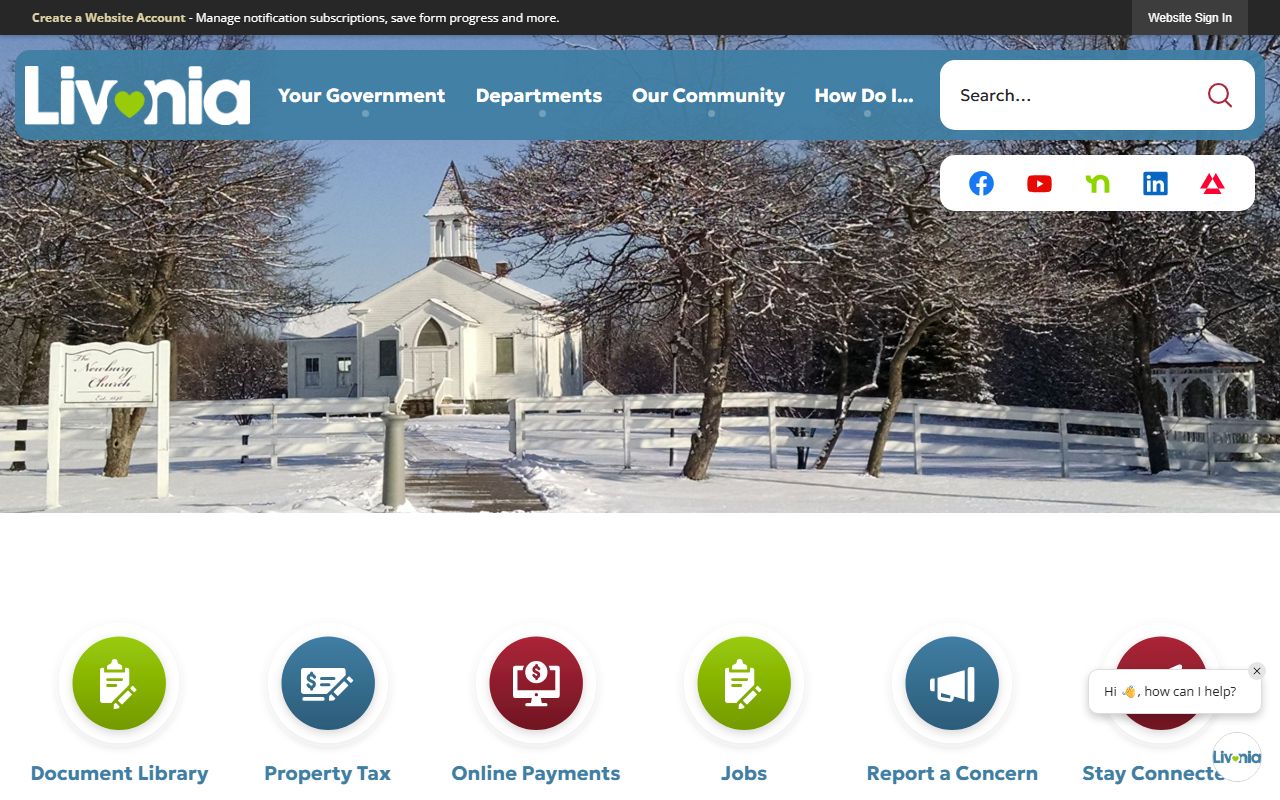
The city's home page connects residents and researchers to the assessing office, where property ownership and tax data are maintained alongside the county's deed index.
The City of Livonia Assessing Department at livonia.gov/230/Assessing maintains property records for all parcels within city limits. The assessing office keeps current ownership, taxable value, assessed value, property class, and parcel dimensions. These records are updated each time a Property Transfer Affidavit is filed. When property in Livonia changes hands, the buyer must file this affidavit with the city assessor within 45 days of the recorded transfer. The filing triggers an uncapping of the taxable value to the current state equalized value. Missing the 45-day window results in a penalty assessed by the State Tax Commission.
The assessing office provides online property inquiry, property tax online tools, and a document library through the city website. These tools let you look up a parcel's current owner, tax history, and assessment record without visiting city hall. If you know a property's address, you can find the current owner's name and then use that name to search the county deed index for the recorded transfer instruments.
Building Department and Permit Records
The City of Livonia Building Department maintains records of all permits issued for construction, renovation, electrical and mechanical work, and demolition within the city. Building permits are public records. If you are purchasing a Livonia property and want to check whether prior work was done with permits, a search through the building department by address will show the permit history.
Unpermitted work is a common issue in older suburban communities. Michigan building code requires permits for most structural changes, additions, and major system replacements. Work done without permits can create problems at resale, affect insurance coverage, and sometimes require correction before a lender will fund a loan. Checking the permit history before making an offer is a straightforward due-diligence step.
Here is Michigan Treasury guidance on change-of-ownership reporting, which explains how property transfers are tracked by state agencies and what steps sellers and buyers must take after a deed is recorded.

Understanding these requirements helps buyers in Livonia avoid assessment penalties and ensures the assessor's records are updated promptly after closing.
Searching Livonia Deed Records
The Wayne County Land Records search tool, available through the Register of Deeds website, provides online access to the index. You can search by grantor name, grantee name, document type, or date range. Results show the document number, recording date, and party information. Document images are available for a fee. This tool covers a significant portion of recorded instruments, with older records available through in-person research at the office.
For in-person research, the Wayne County Register of Deeds office at 400 Monroe St., 5th Floor, Detroit is open during regular business hours. Public search terminals allow free index access. Staff can assist with locating older records by book and page number or help narrow a search by name. Bring an address, parcel number, or owner name to start.
Mail requests are handled by the office. Send a written request with document identification information, a check for the copy fee, and a self-addressed stamped envelope. Call 313-224-5857 before mailing to confirm current procedures and payment methods.
Here is Michigan Treasury guidance on easement and conveyance tax rules, which explains how certain property rights are taxed when transferred by deed or separate instrument.
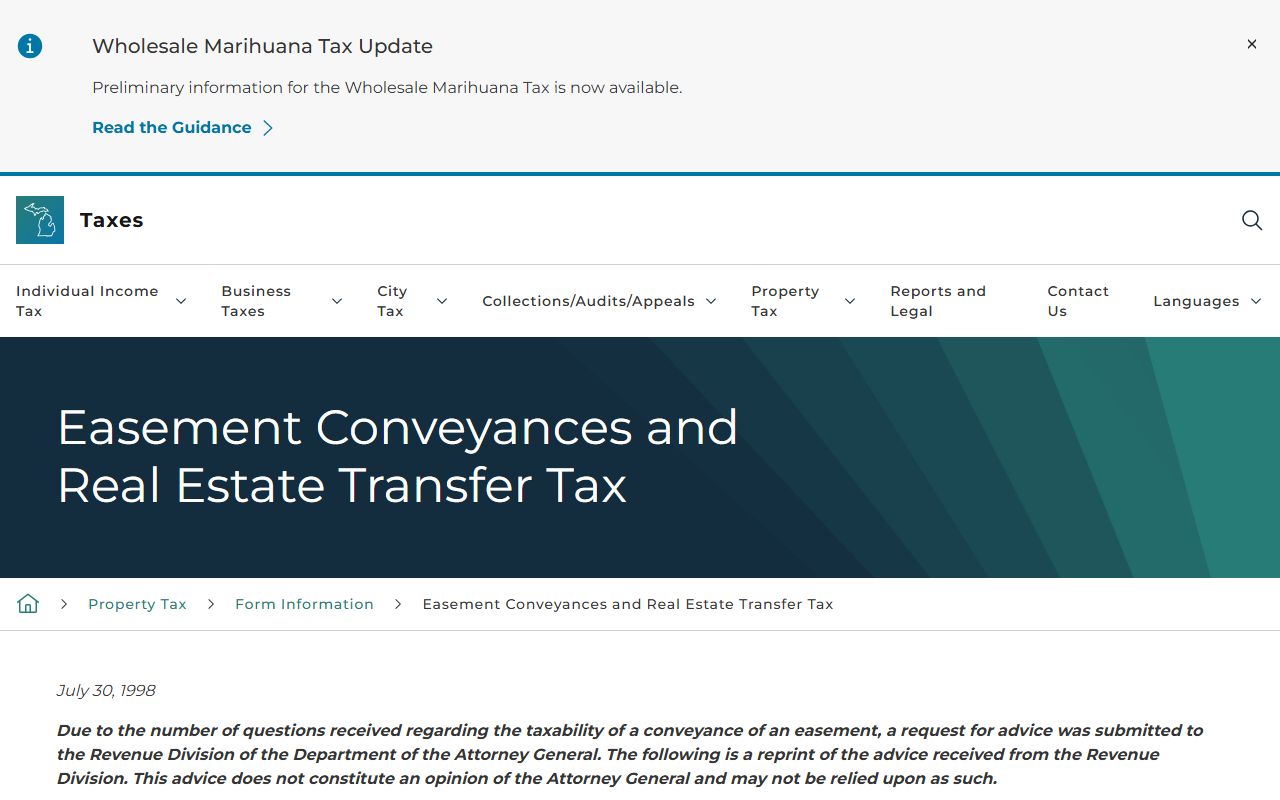
Easements recorded against Livonia properties can affect how a parcel is used, so understanding the recorded easement inventory is part of a full title review.
Liens, Easements, and Tax Delinquency
A deed search is only part of a complete title review. Other recorded instruments can affect ownership and use of a Livonia property just as much as the deed itself. Mortgages that should have been discharged, mechanic's liens from unpaid contractors, judgment liens from court cases, and federal tax liens are all recorded at the Wayne County Register of Deeds and searchable by owner name. Any of these can survive a sale if not cleared before closing.
Easements in Livonia are common, particularly in older residential neighborhoods where utility companies hold recorded rights to access pipes and lines that run through private property. These easements run with the land and bind every future owner. A title search identifies them; title insurance provides protection if an easement was missed.
Delinquent property taxes in Michigan act as a first-priority lien and can follow a property through a sale if not addressed. Below is Michigan Treasury guidance on delinquent tax rules and what they mean for property transfers.

Before closing on any Livonia property, a full tax lien search through the Wayne County Treasurer's records is a necessary step to confirm no outstanding amounts remain.
Nearby Cities
These nearby Michigan cities also have deed records pages covering their county offices and local property resources.